Fabric base
Crafted from premium Gharwal Silk, this fabric offers a luxurious sheen, fluid drape, and exceptional comfort.

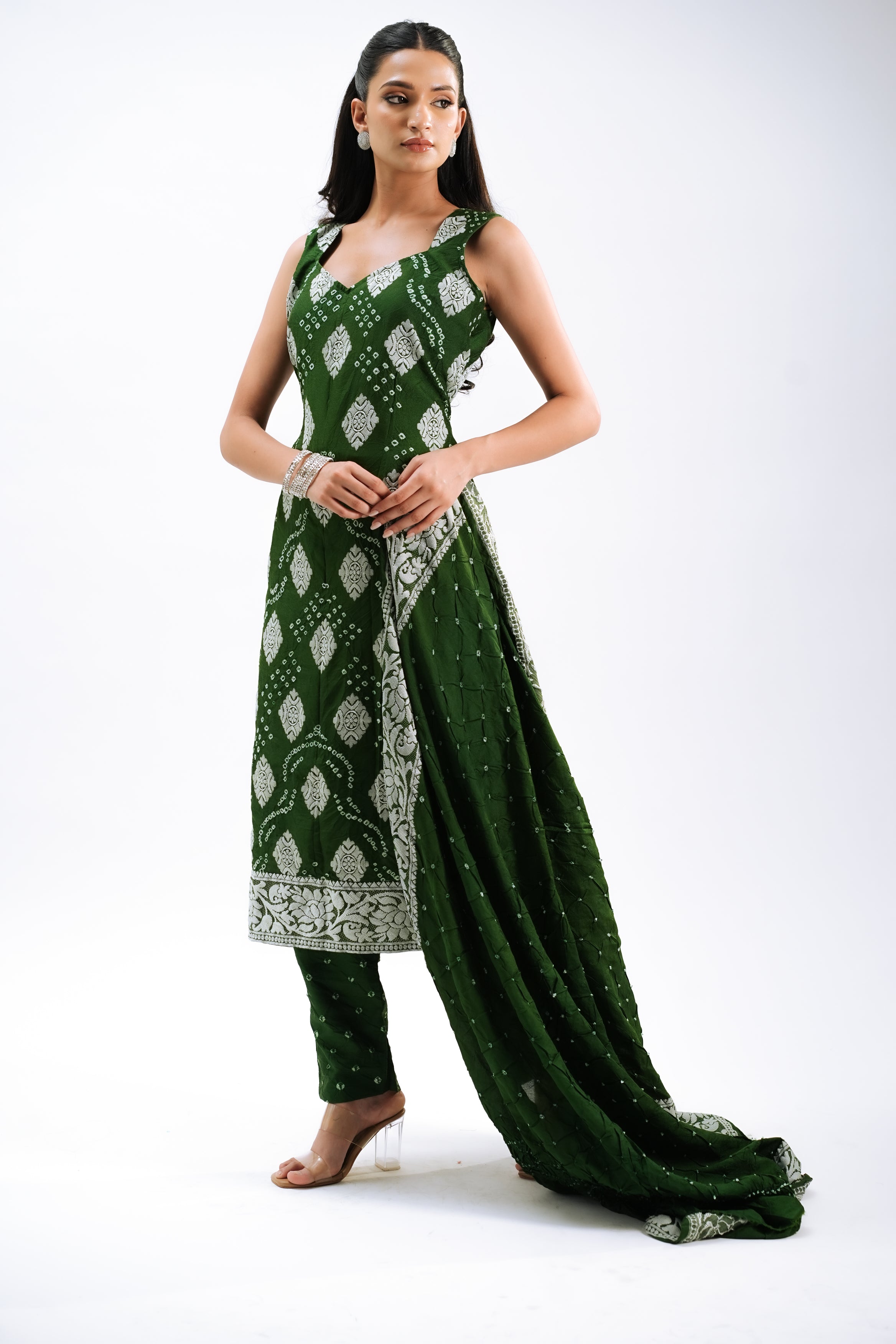
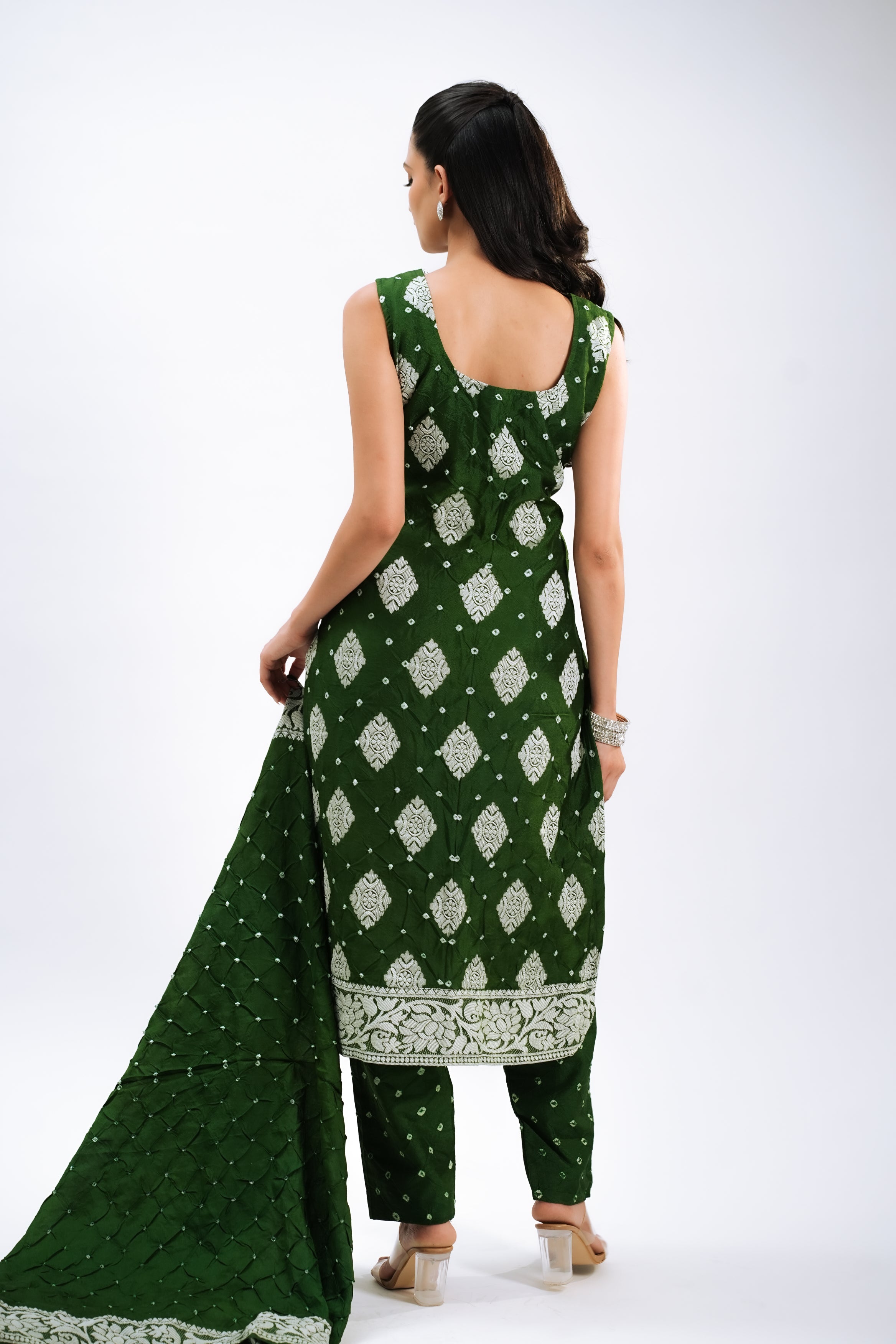
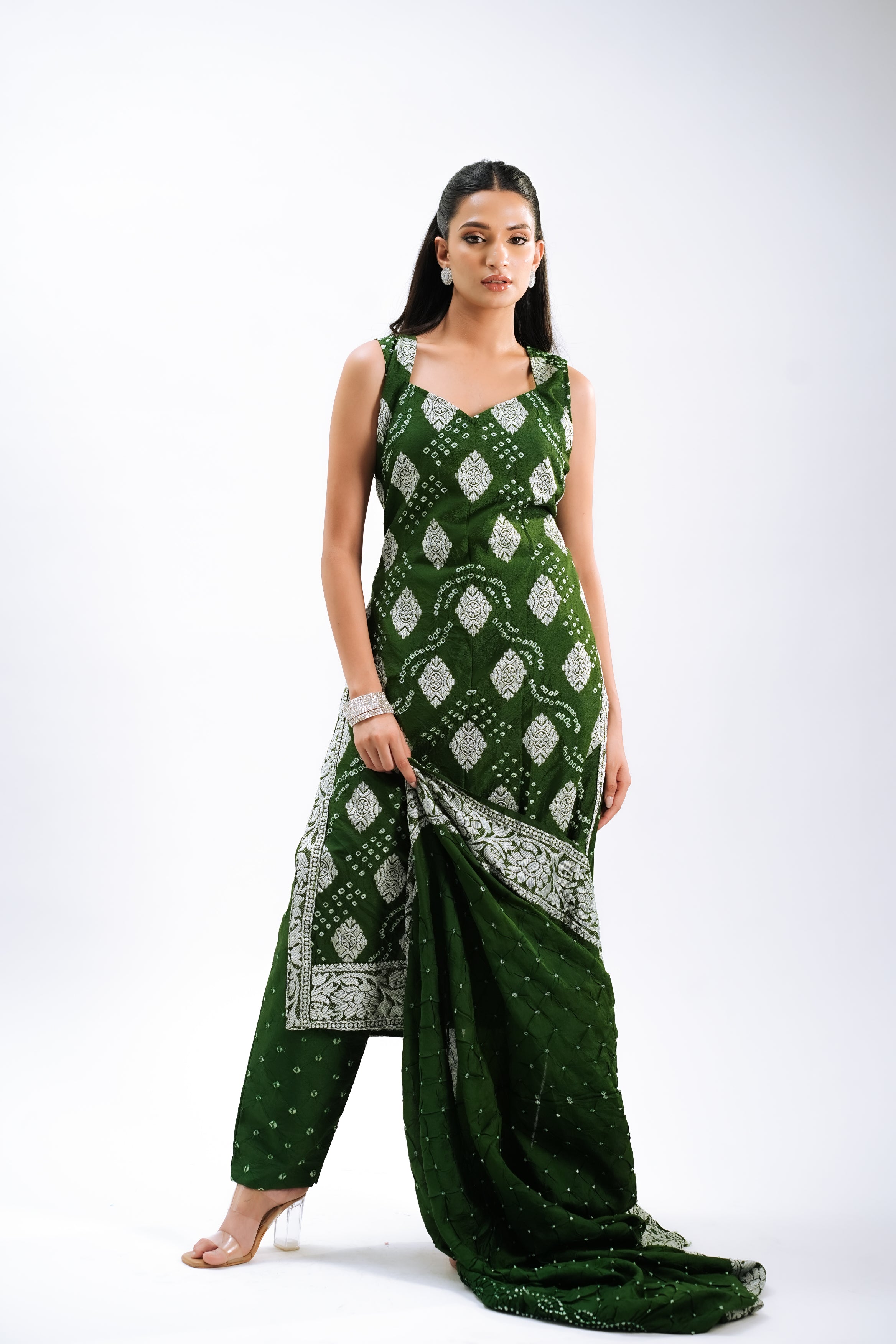
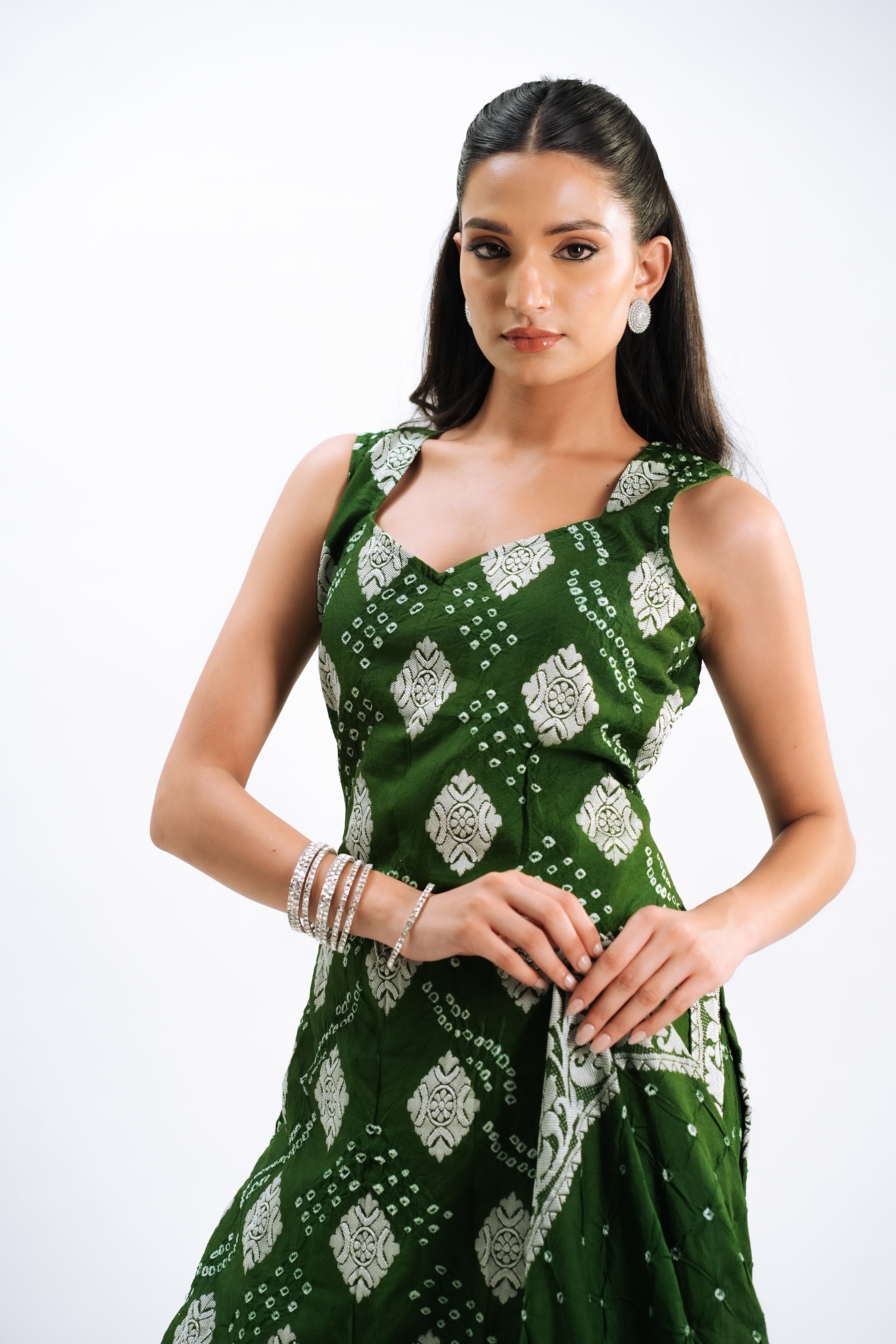
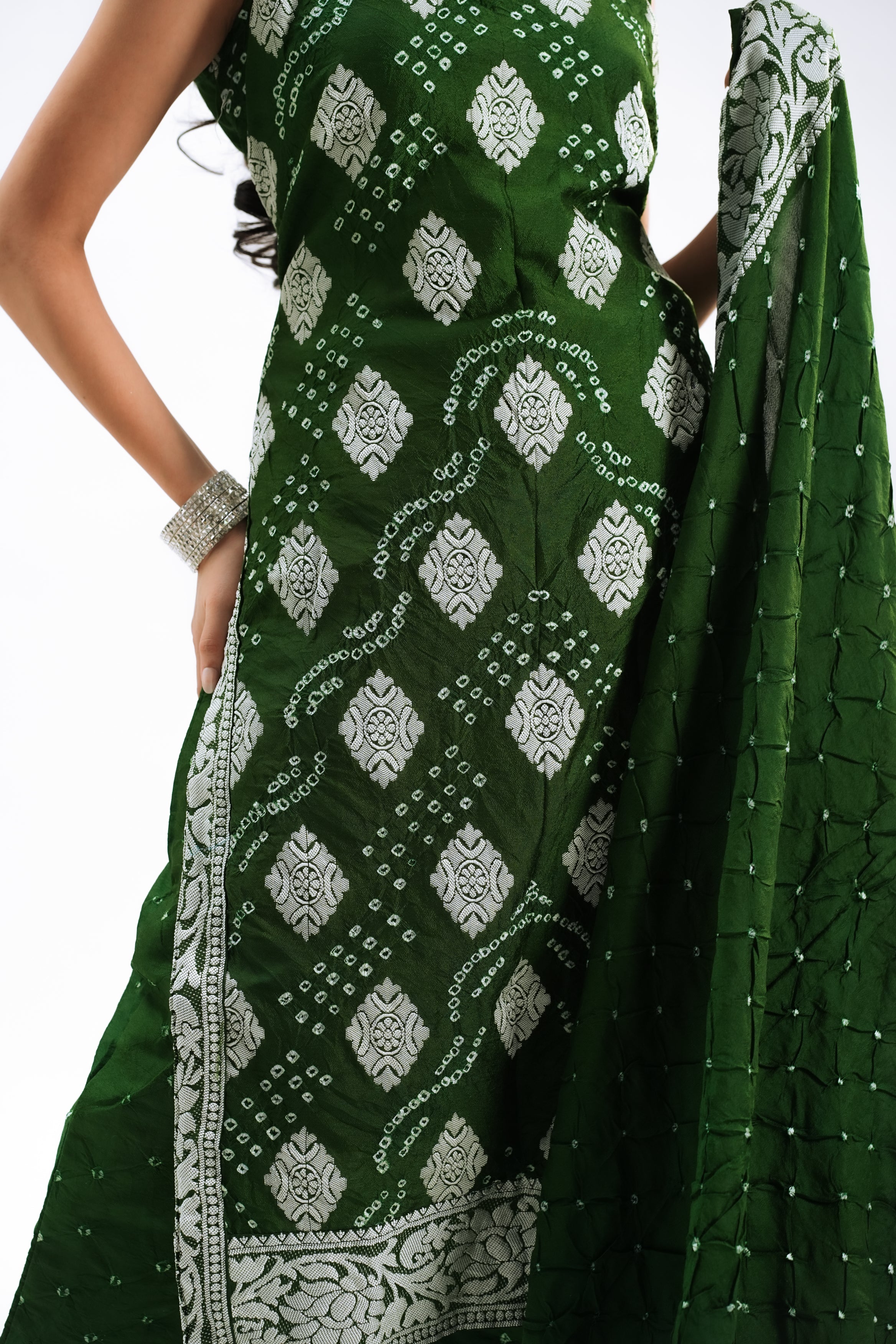
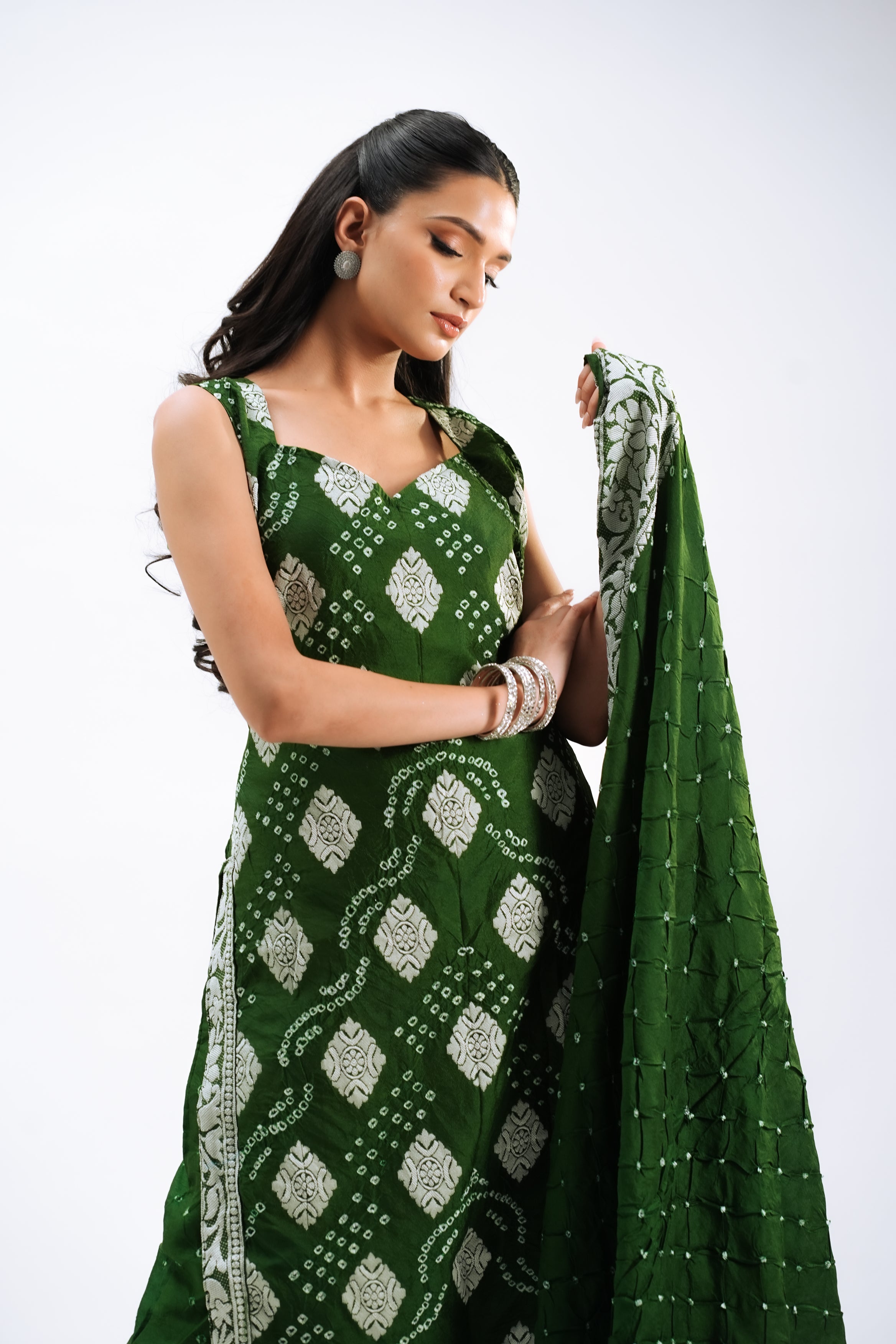
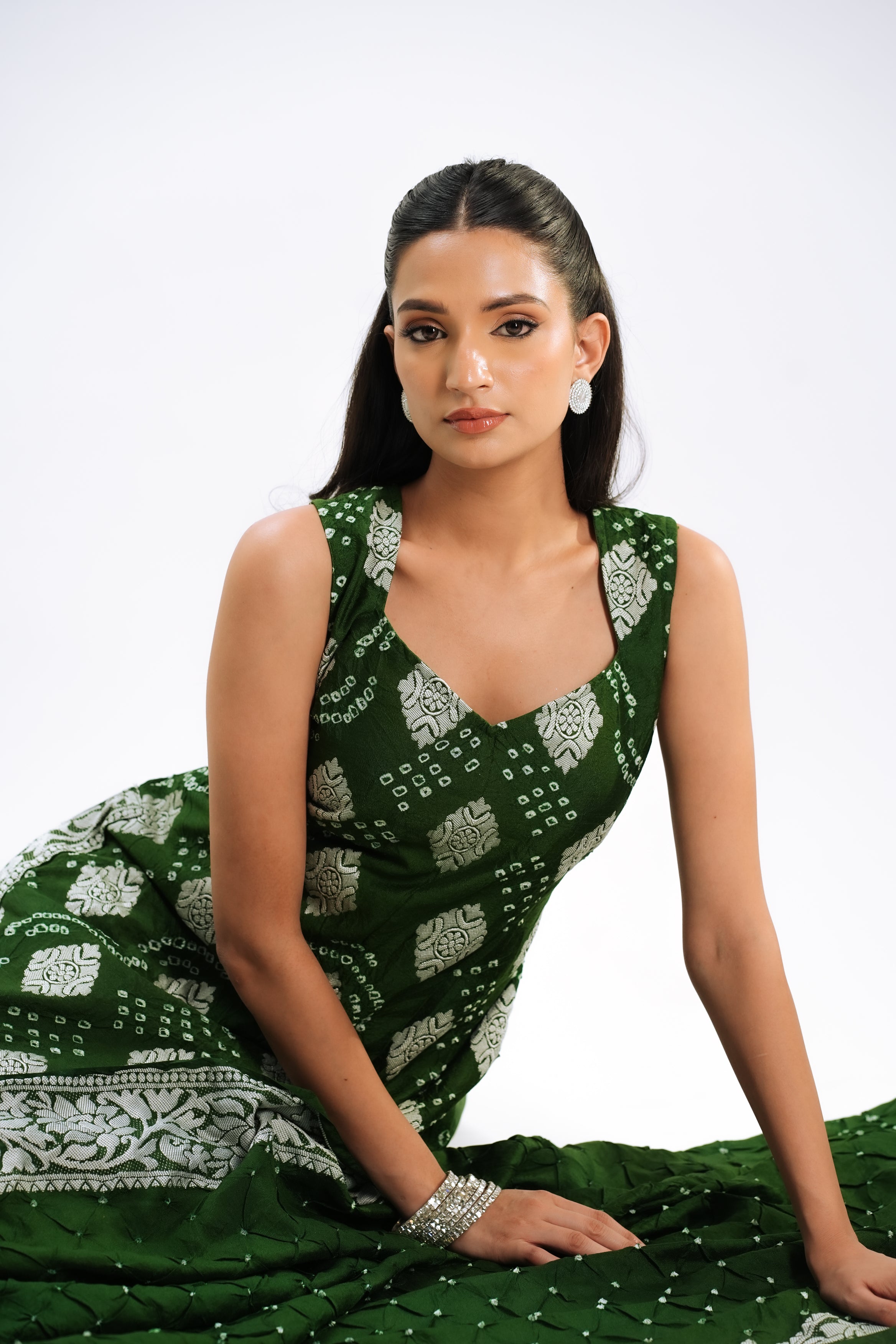
| Outfit type | Suit Set |
| Fabric | Gharwal Silk |
| Work style | Handcrafted Bandhani Work |
| Craft technique | Bandhani Tie-Dye |
| Design pattern | Traditional Geometric & Floral Bandhani Motifs |
| Fit | Comfort Fit |
| Occasion | Festive Celebrations, Wedding Functions, Traditional Gatherings, Cultural Events |
| Set includes | Kurta, Pants & Dupatta |
| Color palette | Emerald Green, Ivory & Silver |
| Origin | Rajasthan, India |
| Style inspiration | Inspired by Rajasthan’s celebrated Bandhani traditions, this elegant emerald ensemble combines artisanal craftsmanship with timeless festive sophistication. |
Width is consistent across the full length including pallu. Blouse piece is attached (not separate). The standard saree is suitable for heights 5'2"–5'8"; if you are taller, let us know via WhatsApp before ordering.
Your purchase sustains a Banarasi weaving family in the Madanpura quarter of Varanasi — a craft that has been practised here since the Mughal period. The intricate kadwa buti technique used in this saree is among the most time-consuming weave styles: each buti is woven individually rather than carried across the back of the fabric, producing a cleaner reverse side and richer texture.
Dry clean recommended for best fabric care.
Store in a cool, dry place.
Steam iron on low heat if required.
Avoid direct perfume or harsh chemicals on embellishments.
The weaver
This collection was thoughtfully envisioned and curated by Aditi Tiwari, founder of ARTHENIC, through extensive research into fabric quality, color palettes, traditional motifs, and contemporary ethnic fashion trends. Every detail-from selecting the fabric and silhouette to sourcing artisans and coordinating craftsmanship-was personally developed to create a piece that feels elegant, festive, and timeless.
Working closely with local artisans and tailors from Rajasthan, the collection blends traditional Bandhani-inspired aesthetics with modern styling and comfort. The craftsmanship reflects patience, detail, and the beauty of handmade Indian fashion.
Every outfit is designed not just as clothing, but as a celebration of heritage, individuality, and thoughtful craftsmanship-where tradition meets a refined modern identity
Good design is not just about appearance - it’s about emotion, detail, and the story stitched into every piece.
— Aditi Tiwari, Founder, ARTHENIC
How it's made
An ethnic outfit is never created by one process alone. It comes together through fabric sourcing, color research, design selection, tailoring, fitting, detailing, and finishing. Every element in this collection was carefully developed to create a look that feels festive, elegant, and timeless while remaining comfortable and wearable. This collection by ARTHENIC reflects a balance between traditional Rajasthani inspiration and modern ethnic styling.
Fabric sourcing & selection
Color palette planning
Design & silhouette development
Detailing & finishing
Tailoring & quality check
The fabric
Fabric base
Crafted from premium Gharwal Silk, this fabric offers a luxurious sheen, fluid drape, and exceptional comfort.
Texture & motifs
The rich emerald green base is adorned with traditional Bandhani-inspired motifs and elegant woven borders that enhance its festive appeal.
Wear & occasion
The coordinated dupatta and lower complete a refined ethnic ensemble designed for celebrations, weddings, and special occasions.
Frequently asked