
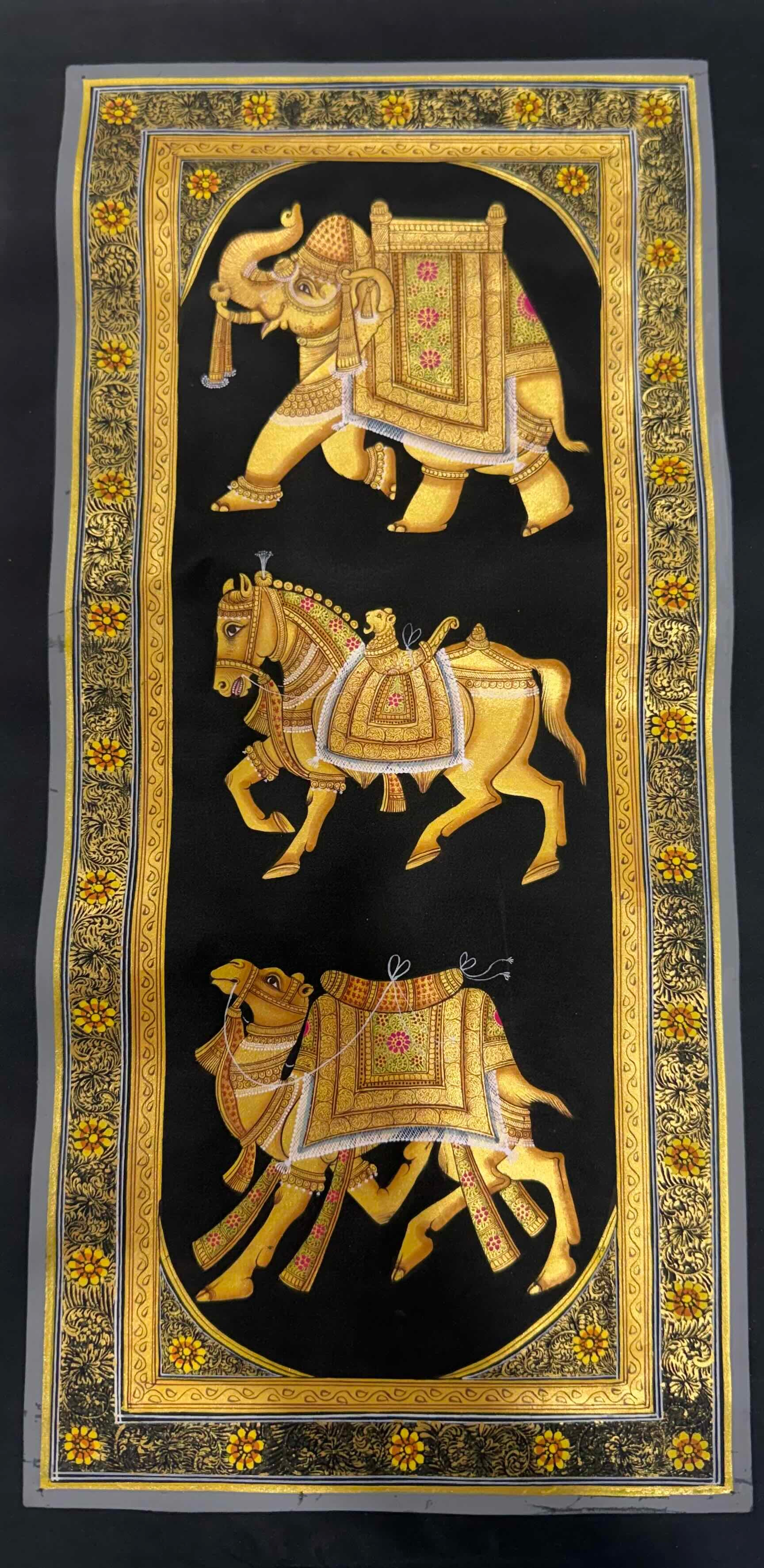
Royal Animal Trio On Black Miniature Cloth Painting
Product details
Painting Details
| Tradition | Traditional Indian Miniature Painting |
| Region | Rajasthan, India |
| Medium | Hand-painted natural pigments on cloth base |
| Canvas preparation | Traditional cloth preparation with layered hand-finished surface |
| Pigments | Antique gold, ivory white, charcoal black, soft rose pink, muted beige, earthy brown, saffron yellow, and natural detailing pigments. |
| Outline technique | Fine hand-drawn miniature detailing using precision brushwork |
| Originality | Original hand-painted artwork - not a print or reproduction. Created and detailed entirely by the artist by hand. |
| Year | 2026 |
| Subject | Royal animal study featuring a ceremonial elephant, noble horse, and decorated camel rendered in gold, symbolizing authority, valor, endurance, and the interconnected pillars of Rajasthan's royal and desert heritage. |
| Framing | Unframed- Rolled Canvas |
Canvas Size & Dimensions
What's Included
- Original hand-painted miniature artwork— securely packed for safe handling and premium presentation
- Certificate of Authenticity— issued by ARTHENIC with artwork title, artist details, dimensions, and authenticity confirmation
- Artist Story Card— featuring the journey and artistic background of the artist
- Care & Display Guide— instructions for maintaining, framing, and preserving the artwork
- Premium protective packaging— designed to preserve delicate hand-painted detailing during transit
- ARTHENIC authenticity documentation— ensuring originality and collectible value of the artwork
Artisan Impact
Rajasthan's miniature painting tradition has long celebrated royal history, heroic narratives, and the grandeur of courtly life. Through generations of artistic mastery, miniature painters have preserved stories of kings, nobles, wildlife, and nature using intricate brushwork and extraordinary attention to detail.
Care & Display
Avoid direct sunlight to maintain the richness of colors.
Clean gently with a soft dry cloth or brush.
Keep away from moisture and damp walls.
Use premium framing with protective glass for long-lasting preservation.
Best suited for indoor decorative display in living rooms, studies, offices, libraries, heritage-inspired interiors, and luxury hospitality spaces.
Handle with clean, dry hands while installing or reframing.
Shipping & Returns
The artist
Neeraj Bhanawat has been connected to art since childhood. Through years of dedication, observation, and emotion, he built a world where every brushstroke speaks quietly yet deeply. His paintings carry patience, sensitivity, and timeless Indian heritage in every detail. For Neeraj, art became more than expression - it became his language, identity, and lifelong devotion.
Through intricate miniature detailing and timeless compositions, Neeraj continues to preserve the soul of traditional Indian art while creating pieces that feel intimate, emotional, and profoundly human.
Each artwork he creates carries a certain stillness - a silence that speaks through color, texture, and detail, making every painting feel alive beyond the canvas.
How it's made
A timeless miniature tradition, painted with patience and precision
This artwork is created through detailed hand-painting techniques inspired by traditional Indian miniature art. Every element - from the architectural detailing to the expressions, textiles, and landscape - is carefully painted by hand using fine brushwork and layered color application. The process reflects years of artistic discipline, where patience, control, and intricate detailing come together to create a composition rich in heritage, storytelling, and emotion.
-
1
Canvas preparation
The cloth surface is carefully prepared and treated to create a smooth painting base suitable for detailed miniature artwork. This preparation allows the fine brush detailing and layered colors to appear sharp, refined, and long-lasting.
-
2
Detailing & brushwork
Every figure, ornament, textile pattern, and architectural detail is painted manually using precision miniature techniques. Fine lines, delicate expressions, and decorative motifs are created through slow and controlled brush movements.
-
3
Color layering & finishing
Multiple layers of colors and detailing are added gradually to build depth, richness, and visual balance. The final artwork is carefully finished to preserve the elegance, texture, and timeless feel of traditional Indian miniature painting.
The story in the subject
A Golden Tribute to Rajasthan's Royal Companions
This striking painting presents three of Rajasthan's most celebrated animals-the elephant, horse, and camel-arranged within an elegant arched composition against a dramatic black background. Executed predominantly in luminous gold tones, the artwork transforms these familiar creatures into regal symbols of power, prestige, and cultural identity. The composition emphasizes their importance not merely as animals, but as enduring companions of royal courts, warriors, and desert travelers.
At the top, the ceremonial elephant stands as a symbol of authority, wisdom, and prosperity. Adorned with richly detailed coverings and ornaments, it reflects the grandeur of royal processions and state ceremonies. Throughout Indian history, elephants have been associated with leadership, dignity, and the prosperity of kingdoms, making them one of the most revered figures in traditional art.
The horse occupies the central position, embodying courage, loyalty, and aristocratic refinement. Deeply connected to Rajput traditions, horses were treasured by rulers and warriors alike for their speed, bravery, and unwavering companionship. The artist captures this noble spirit through graceful movement and intricate decorative detailing that elevates the animal into a symbol of honor and valor.
At the bottom, the camel represents resilience and adaptability. As the lifeline of Rajasthan's desert regions, camels enabled trade, communication, and exploration across vast landscapes. The elegant ornamentation bestowed upon the animal highlights its esteemed role within both daily life and ceremonial traditions, acknowledging its contribution to the region's cultural and economic heritage.
Frequently asked