
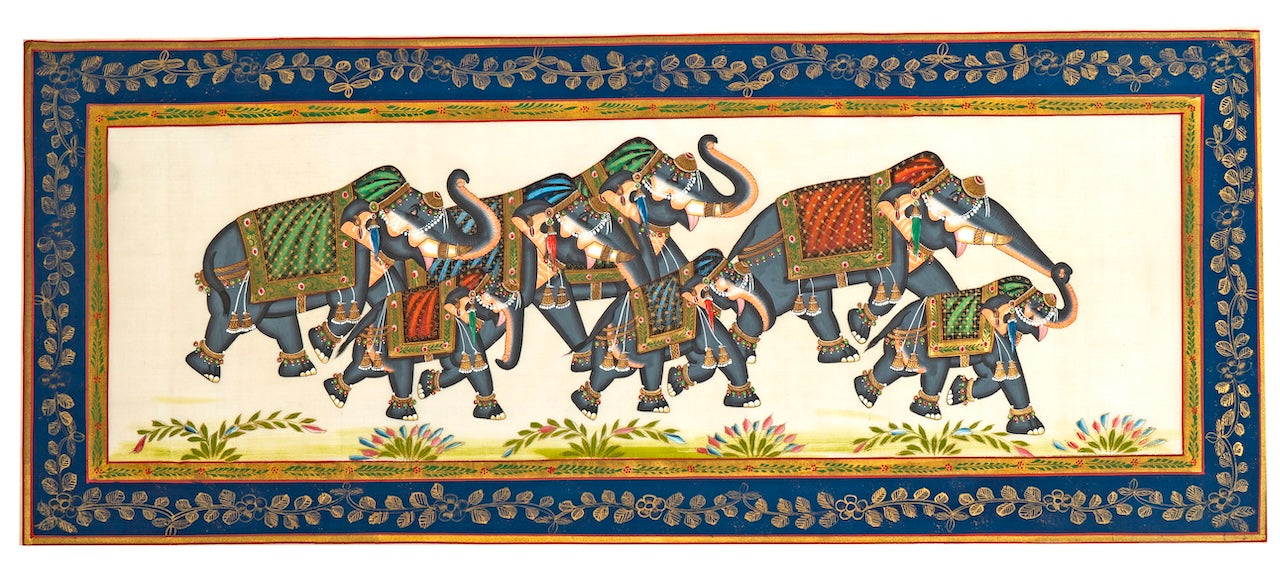
Royal Elephant Procession With Blue Floral Border Miniature Cloth Painting
Product details
Painting Details
| Tradition | Traditional Indian Miniature Painting |
| Region | Rajasthan, India |
| Medium | Hand-painted natural pigments on cloth base |
| Canvas preparation | Traditional cloth preparation with layered hand-finished surface |
| Pigments | Deep indigo blue, emerald green, coral orange, antique gold, ivory white, charcoal black, soft pink, earthy brown, and natural detailing pigments. |
| Outline technique | Fine hand-drawn miniature detailing using precision brushwork |
| Originality | Original hand-painted artwork - not a print or reproduction. Created and detailed entirely by the artist by hand. |
| Year | 2026 |
| Subject | Ceremonial elephant family procession depicting a majestic herd of adorned elephants and calves walking together, symbolizing prosperity, protection, unity, abundance, and the continuity of royal heritage. |
| Framing | Unframed- Rolled Canvas |
Canvas Size & Dimensions
What's Included
- Original hand-painted miniature artwork— securely packed for safe handling and premium presentation
- Certificate of Authenticity— issued by ARTHENIC with artwork title, artist details, dimensions, and authenticity confirmation
- Artist Story Card— featuring the journey and artistic background of the artist
- Care & Display Guide— instructions for maintaining, framing, and preserving the artwork
- Premium protective packaging— designed to preserve delicate hand-painted detailing during transit
- ARTHENIC authenticity documentation— ensuring originality and collectible value of the artwork
Artisan Impact
Rajasthan's miniature painting tradition has long celebrated royal history, heroic narratives, and the grandeur of courtly life. Through generations of artistic mastery, miniature painters have preserved stories of kings, nobles, wildlife, and nature using intricate brushwork and extraordinary attention to detail.
Care & Display
Avoid direct sunlight to maintain the richness of colors.
Clean gently with a soft dry cloth or brush.
Keep away from moisture and damp walls.
Use premium framing with protective glass for long-lasting preservation.
Best suited for indoor decorative display in living rooms, studies, offices, libraries, heritage-inspired interiors, and luxury hospitality spaces.
Handle with clean, dry hands while installing or reframing.
Shipping & Returns
The artist
Neeraj Bhanawat has been connected to art since childhood. Through years of dedication, observation, and emotion, he built a world where every brushstroke speaks quietly yet deeply. His paintings carry patience, sensitivity, and timeless Indian heritage in every detail. For Neeraj, art became more than expression - it became his language, identity, and lifelong devotion.
Through intricate miniature detailing and timeless compositions, Neeraj continues to preserve the soul of traditional Indian art while creating pieces that feel intimate, emotional, and profoundly human.
Each artwork he creates carries a certain stillness - a silence that speaks through color, texture, and detail, making every painting feel alive beyond the canvas.
How it's made
A timeless miniature tradition, painted with patience and precision
This artwork is created through detailed hand-painting techniques inspired by traditional Indian miniature art. Every element - from the architectural detailing to the expressions, textiles, and landscape - is carefully painted by hand using fine brushwork and layered color application. The process reflects years of artistic discipline, where patience, control, and intricate detailing come together to create a composition rich in heritage, storytelling, and emotion.
-
1
Canvas preparation
The cloth surface is carefully prepared and treated to create a smooth painting base suitable for detailed miniature artwork. This preparation allows the fine brush detailing and layered colors to appear sharp, refined, and long-lasting.
-
2
Detailing & brushwork
Every figure, ornament, textile pattern, and architectural detail is painted manually using precision miniature techniques. Fine lines, delicate expressions, and decorative motifs are created through slow and controlled brush movements.
-
3
Color layering & finishing
Multiple layers of colors and detailing are added gradually to build depth, richness, and visual balance. The final artwork is carefully finished to preserve the elegance, texture, and timeless feel of traditional Indian miniature painting.
The story in the subject
A Celebration of Family, Prosperity, and Royal Heritage
This painting beautifully portrays a procession of decorated elephants moving together in harmony, creating a powerful symbol of unity, strength, and continuity. Unlike royal processions centered around kings and nobles, the focus here is entirely on the elephants themselves, emphasizing their cultural and symbolic importance within Indian artistic traditions.
The composition features both adult elephants and young calves walking side by side, conveying themes of family, protection, and generational continuity. The presence of the younger elephants adds warmth and tenderness to the scene, transforming the artwork from a ceremonial depiction into a celebration of companionship and collective strength.
Each elephant is adorned with richly patterned textiles, decorative ornaments, and ceremonial embellishments that reflect the grandeur traditionally associated with royal courts and festive occasions. The intricate detailing highlights the artist's mastery while emphasizing the reverence with which elephants have been regarded throughout Indian history.
The rhythmic arrangement of the figures creates a sense of movement and balance across the composition. Their synchronized progression suggests harmony, cooperation, and shared purpose, values often associated with both family life and successful leadership. The decorative floral borders further enhance the painting's elegance, framing the scene with refinement and artistic symmetry.
In Indian culture, elephants are widely regarded as symbols of wisdom, good fortune, stability, and prosperity. By depicting an entire family of elephants rather than a single ceremonial animal, the artist expands these meanings to include themes of nurturing, continuity, and collective well-being.
Through meticulous miniature detailing and graceful composition, the painting becomes more than an animal portrait. It serves as a timeless expression of abundance, harmony, and enduring heritage, celebrating the qualities that have made the elephant one of the most cherished symbols in Indian art and culture.
Frequently asked